V1·05 · Twenty-one
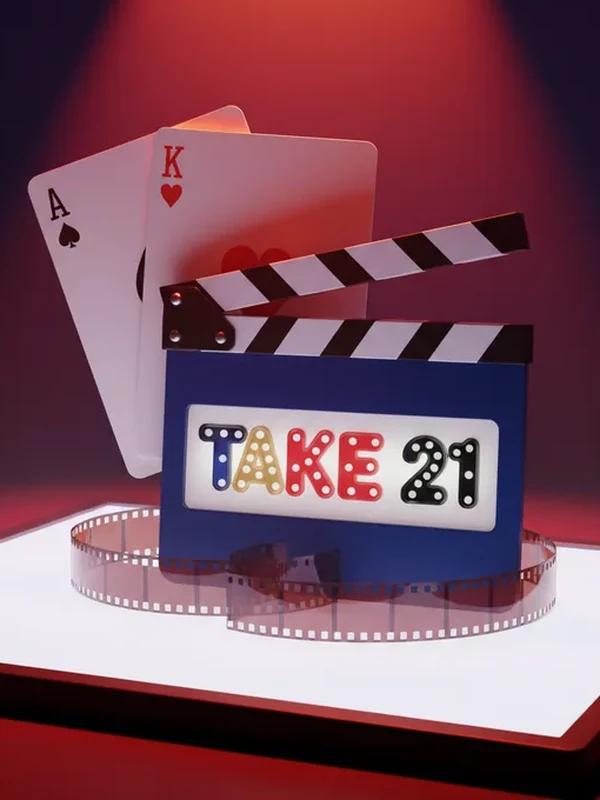
Take 21
Get closer to 21 than the house hand without going over. Take a card, stand or double, with a script note if you want one.
- Engine
- Twenty-one
- Shape
- One hand against the house
- Stakes
- 12 to 240 frames
- Pace
- As long as your hand takes
- Feel
- Choices that matter

Inspector
Your frames2,400
Frames have no cash value. Nothing here can be bought.
- Rounds
- 0
- Staked
- 0
- Back
- 0
- Net
- ±0
This session only. Pause any time from the header, or set limits in the Intermission.
Rules
How it plays
- Choose a stake and press Deal a hand. You get two cards face up; the house shows one and keeps one face down.
- Number cards count as marked, picture cards as 10, an ace as 11 or 1, whichever helps the hand.
- Take a card as often as you like, Stand to keep your total, or Double on your first two cards: the stake doubles and you get exactly one more card.
- The house then draws until it has 17 or more. The closer total without going over takes the hand.
Pay table
What it pays
The house draws to 16 and stands on every 17, soft or hard.
| Hand | What comes back |
|---|---|
| Your total beats the house, or the house busts past 21 | Stake back plus the same again (1 to 1) |
| 21 with your first two cards | Stake back plus one and a half times it (3 to 2) |
| Same total as the house | Stake back (a push) |
| You bust past 21, or the house is closer | Nothing back |
| Double | The stake doubles and pays as above on one more card |
Fair play
Good to know
- 21 with your first two cards pays 3 to 2, unless the house also has it, which is a push.
- If the house's first two cards make 21, the hand ends at once.
- There are no splits, no side bets and no insurance.
- Script note tells you a plain move for this table. It is a guide for the long run, not a promise about this hand.
- The cards for the hand are drawn when it starts, from fresh 52-card draws. Your choices decide which of them you see.